(916) 308-3856


📌Key Takeaways
High-pressure misting at 1000+ PSI prevents fungal disease by keeping leaves dry while cooling greenhouse air through flash evaporation.
-
Leaf Wetness Triggers Disease:Most foliar pathogens like botrytis need actual water on plant surfaces, not just high humidity, to germinate and spread.
-
1000 PSI Creates Flash Evaporation:Ultra-fine droplets evaporate in the air before reaching foliage, cooling temperatures up to 25 degrees without wetting leaves.
-
Configuration Prevents Wetness:Matching nozzle size to climate and mounting fans around 10 feet high ensures complete airborne evaporation before droplet contact.
-
Four Causes Create Wet Spots: Temperature too low, fan mounted too low, nozzles too large, or pump undersized for nozzle count all compromise evaporation.
-
Interval Control Adds Protection: Short spray cycles with longer pauses prevent moisture accumulation when humidity rises or temperatures drop toward evening.
Dry leaves = no fungal foothold, even during extreme heat.
Commercial greenhouse growers balancing cooling needs against disease risk will find system design specifications here, preparing them for the detailed configuration guide that follows.
Heat spikes kill crops.
Picture this: it's 3 PM on a sweltering summer afternoon. Your greenhouse thermometer climbs past 95°F, and you're watching your plants wilt in real time. You know they need cooling, but every time you've tried misting in the past, you've ended up with wet leaves and a botrytis outbreak two days later. The frustration is real, and it's costing you money.
High-pressure misting at 1000+ PSI creates micro-fine water droplets that evaporate in the air before they ever touch your foliage. Think of it as an air conditioner for your greenhouse that uses water physics instead of chemicals or massive energy bills. The air cools. Your plants stay dry. And the leaf-wetness-dependent diseases that thrive on damp foliage never get the conditions they need to take hold.
The key lies in choosing the right nozzle configuration for your climate and mounting height, pairing it with proper airflow patterns, and using interval timing to match evaporation conditions. This guide walks you through exactly how to set up a high-pressure misting fan system that protects your crops instead of putting them at risk.
Leaf Wetness vs. Humidity: What Actually Triggers Fungus
Ambient humidity and leaf wetness are not the same thing.
Many growers confuse high humidity with disease risk, but most foliar fungal pathogens like botrytis and various leaf spot diseases require actual water on plant surfaces to germinate and spread. A greenhouse can run at 70% relative humidity all day without triggering an outbreak from these pathogens, as long as leaves remain dry. The moment water droplets sit on foliage for extended periods, however, conditions become ideal for fungal growth.
High-pressure misting offers protection by addressing both concerns. The ultra-fine droplets evaporate before reaching plant surfaces, preventing the leaf wetness that triggers most fungal diseases. At the same time, the evaporative cooling process keeps temperatures down without creating the stagnant, saturated conditions where diseases thrive.
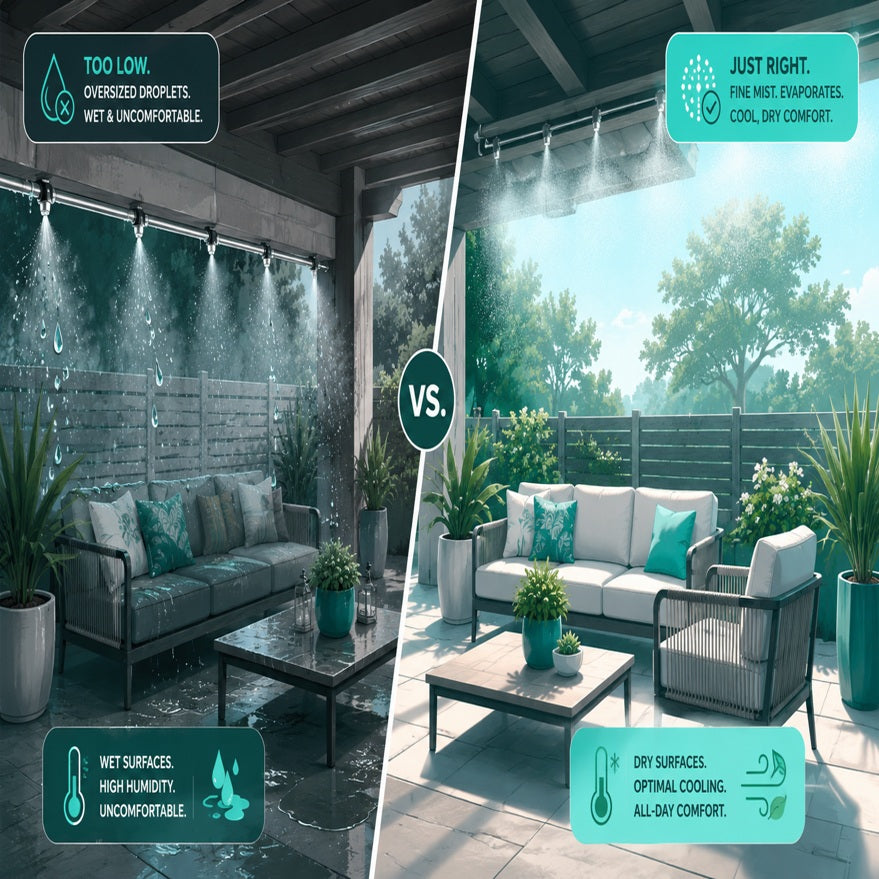
This distinction matters because it changes how you think about cooling. Traditional low-pressure misting systems (30–40 PSI) produce large droplets that land on leaves and stay there. High-pressure systems operating at 1000+ PSI create droplets so fine they evaporate while still airborne. The air absorbs the moisture, temperatures drop, and your plant surfaces never get wet.
Extension pathologists at institutions like Mississippi State University and Cornell University consistently emphasize that leaf wetness duration drives fungal disease development in controlled environments. Reduce that duration to zero, and you've eliminated the conditions most pathogens need to thrive.
The mindset shift is straightforward: don't fear humidity by itself. Focus on keeping leaves dry between irrigation events and limiting how long any free moisture sticks around.
Why 1000 PSI Flash Evaporation Keeps Leaves Dry

The physics are straightforward: smaller droplets evaporate faster.
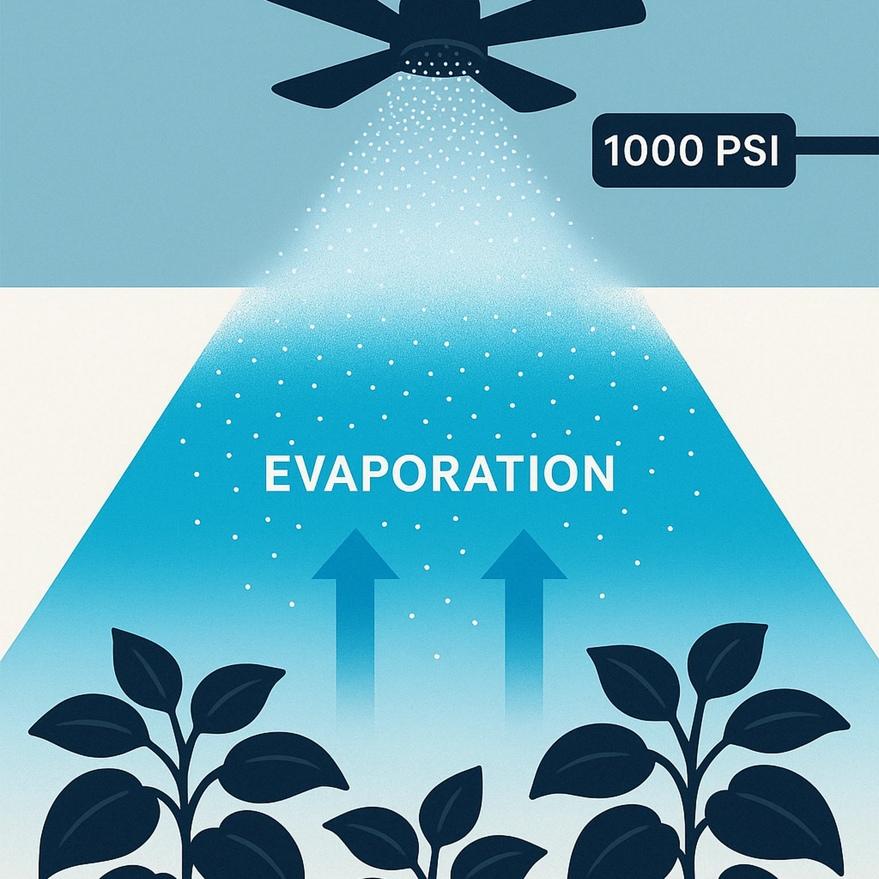
At 1000+ PSI, misting nozzles atomize water into particles so fine they flash-evaporate almost instantly in warm air. This evaporation process pulls heat energy from the surrounding atmosphere, cooling it by up to 25 degrees depending on temperature and humidity conditions. Drier climates experience more dramatic cooling because lower ambient humidity allows faster evaporation.
Lower-pressure systems tell a different story. At 30–40 PSI, droplets are large enough that they travel downward and deposit on surfaces before evaporating. Mid-pressure systems around 200–300 PSI perform better but can still cause wetting under many conditions. Only true high-pressure operation creates the flash-evaporation effect that keeps foliage completely dry.
It's worth noting that this isn't about adjusting pressure on the fly. The system configuration is determined at design time through nozzle size and quantity selection. Once your setup matches your climate conditions and mounting height, the pump delivers consistent 1000 PSI performance without any ongoing adjustments needed.
Configure for Dry Cooling: Nozzles, Airflow, Interval Control
A properly configured system has three distinct components working together: the fan unit, an external high-pressure pump installed in a remote location, and high-pressure lines connecting them. When installing high-pressure lines behind ceiling surfaces, run them through a protective sleeve (Pex or PVC) for long-term durability. Each element plays a specific role in achieving dry cooling.
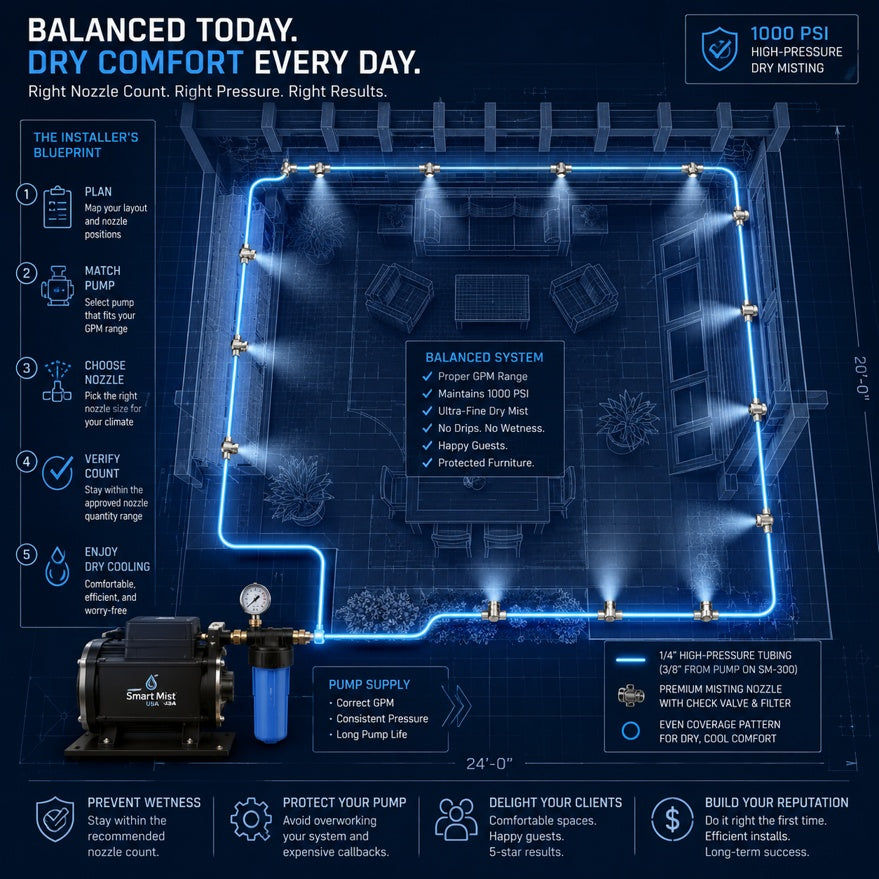
Nozzle selection depends on two primary factors: your local climate (specifically humidity levels) and the mounting height of your fans. Humid environments and lower mounting heights typically call for smaller nozzles that produce less total moisture output. Drier climates with higher ceilings can handle larger nozzles. The pump size is then matched to the total nozzle count and size at the design stage.
Airflow direction matters more than most growers realize. Position fans so air moves across and through canopy gaps rather than directly onto leaf surfaces. For ceiling-mounted misting fans (typically 18–24" units), a mounting height around 10 feet creates a cooling zone extending 12–16 feet in diameter from the center of the fan in typical installations. This coverage pattern distributes cooled air without concentrating mist on any single area.
Interval control provides the final layer of protection. App-controlled pumps allow you to set spray/pause cycles that match real-time conditions. When relative humidity rises or temperatures drop toward evening, short spray intervals (perhaps 3 seconds on, 5 seconds off) give each burst time to fully evaporate before the next. This prevents moisture accumulation even when evaporation rates slow down.
Four Reasons Wetness Happens and How to Fix Each Fast
Even well-designed systems can cause wetness if something falls out of alignment. When you notice moisture on leaves or benches, check these four causes in order:

Temperature too low or humidity too high for evaporation. When ambient conditions limit evaporation speed, mist travels farther before disappearing. The fix: reduce runtime using interval timing, increase ventilation to lower humidity, and avoid evening spray cycles as temperatures fall. Adding airflow with traditional fans can also help move moisture-laden air out of the growing space.
Fan mounted too low. Mist needs airtime to evaporate. If your ceiling fans are closer than 10 feet to the canopy, droplets may reach plants before fully evaporating. The fix: raise the mounting height to specification, or switch to smaller nozzles that produce less total output.
Nozzles too large for conditions. Larger nozzles produce more water per minute, which can overwhelm evaporation capacity in humid environments or low-ceiling installations. The fix: step down to smaller nozzle sizes and potentially reduce the total nozzle count.
Nozzle count or size too large for the pump. When the pump can't maintain full pressure with your nozzle configuration, droplets get larger and wetness occurs. The fix: contact a system specialist to match your pump capacity to your nozzle layout.
After addressing any wetness issues, maintain your filtration system to prevent recurrence. A stainless steel sediment filter handles particulates, while a phosphate filter treats hard water in regions with high calcium content. Proper filtration protects both nozzles and pump components from damage caused by mineral buildup. For calcium deposits on nozzles, check your nozzle manufacturer's guidance before selecting a cleaning solution. CLR is highly effective for dissolving calcium but may affect seals or O-rings in some nozzle designs. Vinegar offers a gentler alternative for sensitive components, though it works more slowly.
Product Fit: Ceiling vs. Wall and Pedestal Misting Fans
Different greenhouse layouts call for different fan configurations, and understanding where each type excels helps you build the right system.
Ceiling misting fans create concentrated microclimates directly beneath them. They're ideal for spaces where perimeter misting lines would underperform, particularly wide or deep bays where cooled air from the edges wouldn't reach the center. They're also the right choice when you need targeted cooling in specific zones rather than uniform coverage across an entire structure.
Wall-mounted and pedestal misting fans offer flexible placement options. Position them at the ends of growing beds, along service aisles, or in corners that ceiling units can't reach effectively. In many operations, pedestal fans complement ceiling units to even out temperature distribution across irregularly shaped spaces.
Traditional non-misting fans remain valuable for pure air movement. They help distribute cooled air from misting fans throughout larger spaces and increase evaporation rates by moving humid air away from plant surfaces. These fans also support vapor pressure deficit (VPD) management, helping plants transpire effectively and maintaining the air circulation needed to keep foliage dry. The best cooling strategies often combine both technologies rather than relying on either alone.
Fungal Risk Assessment: 60-Second Checklist
Use this quick assessment after any system runtime to verify your setup keeps foliage dry:
-
☐ Leaves dry within 10–15 minutes after misting stops
-
☐ No visible droplets on foliage, benches, or walkways
-
☐ Mounting height at specification (around 10 feet for ceiling fans) with airflow directed across, not into, the canopy
-
☐ Nozzle size and quantity matched to your climate and mounting height (not over-nozzled for conditions)
-
☐ Interval control active during high humidity periods or evening cooldowns
-
☐ Filters maintained: stainless sediment filter clean, phosphate filter installed in hard-water areas
If any item fails this check, work through the four wetness causes above to identify and correct the issue before your next runtime cycle.
This checklist can be printed as a one-page reference and kept near your control panel for quick verification during operation.
Frequently Asked Questions
Do misting fans spread mildew?
Not when they're high-pressure (1000+ PSI) and properly configured. The ultra-fine mist evaporates in the air rather than depositing on leaves, so plants stay dry and fungal spores never get the wet surface conditions they need to germinate.
How do I stop wet spots under fans?
Activate interval control during marginal evaporation conditions, verify your mounting height meets specifications, and consider downsizing nozzles if wetness persists. Sometimes the issue is simply running continuous spray when conditions call for shorter cycles.
What maintenance prevents wetting risk over time?
Keep filters clean and clean or replace clogged nozzles promptly. In hard-water regions, install a phosphate filter to prevent mineral buildup that degrades atomization quality. For existing calcium deposits, check your manufacturer's cleaning recommendations. CLR effectively dissolves calcium but verify compatibility with your specific nozzle seals before use.
Dry cooling represents the safest path through summer heat spikes without feeding the fungal problems that cost growers time and money. The technology exists, the configuration principles are straightforward, and the peace of mind is worth the setup effort.
For help designing a system matched to your specific greenhouse conditions, explore high-pressure misting system kits that include the pump, filtration, nozzles, and tubing needed for commercial-scale operations. Browse our app-controlled pumps with interval timing built in to match your precise cooling needs. Review the installation guides for step-by-step setup instructions, or visit the humidity control collection for complementary environmental management tools.
Ready to talk through your specific situation? Schedule a free phone consultation with Jeff to get expert guidance on the right configuration for your operation.
About the Smart Mist USA Insights Team
The Smart Mist USA Insights Team is our dedicated engine for synthesizing complex topics into clear, helpful guides. While our content is thoroughly reviewed for clarity and accuracy, it is for informational purposes and should not replace professional advice.
Disclaimer: This guide is intended as a comprehensive starting point. For decisions specific to your unique situation, we always recommend consulting a qualified professional.
References:
[1] Mississippi State University Extension, guidance on watering practices and plant disease risk, emphasizing that free moisture on leaves and stems significantly increases disease pressure and should be limited through careful irrigation timing and methods. extension.msstate.edu
[2] Cornell University resources on humidity, condensation, and greenhouse disease management, highlighting the role of leaf wetness duration in foliar disease development. vegetables.cornell.edu
[3]Michigan State University Extension, explanation of how temperature, relative humidity, and vapor pressure deficit (VPD) interact to influence plant transpiration and drying, supporting the benefit of moving air and managing VPD to keep foliage dry. canr.msu.edu.