(916) 308-3856


📌 Key Takeaways
Phosphate filtration prevents calcium scale from destroying your 1000-PSI misting system's performance.
-
Phosphate Treats, Sediment Catches: Phosphate filters keep calcium dissolved while sediment filters remove physical particles that clog nozzles.
-
Install Filters Before the Pump: Positioning filtration on the pump's intake side protects valves and nozzles from scale buildup.
-
Log Every Cartridge Change:Tracking replacement dates based on water hardness establishes the right maintenance rhythm for your conditions.
-
Clean With CLR, Not Vinegar:CLR dissolves calcium deposits effectively; if cleaning doesn't restore fine mist patterns, replace the nozzle.
-
Winterize to Prevent Damage:Draining lines, removing nozzles, and storing pumps indoors prevents freeze damage that warranty won't cover.
Filtration costs less than replacing clogged components or losing crops to heat stress.
Greenhouse and nursery operators managing high-pressure misting systems will eliminate recurring clog problems here, preparing them for the detailed maintenance schedules that follow.
Half your greenhouse zone is spitting, not misting.
It's mid-July, temperatures are climbing past 95°F, and you're watching droplets fall onto foliage instead of evaporating into cooling relief. The micro-nozzles that delivered perfectly dry cooling last month now produce an uneven, sputtering mess. Hot spots are forming, disease pressure is building, and your carefully planned crop environment is slipping out of control.
This scenario plays out in greenhouses and nurseries across the country, and the culprit is almost always the same: hard water. Calcium deposits have been silently narrowing those precision micro-orifices, and now your 1000-PSI system can't deliver the flash-evaporation that keeps plants cool without getting them wet.
The good news? Preventing this problem is straightforward once you understand what's happening and build the right filtration and maintenance routine. A phosphate filter paired with basic upkeep protects your investment and keeps dry cooling reliably boring, exactly as it should be.
Why Hard Water Clogs High-Pressure Nozzles
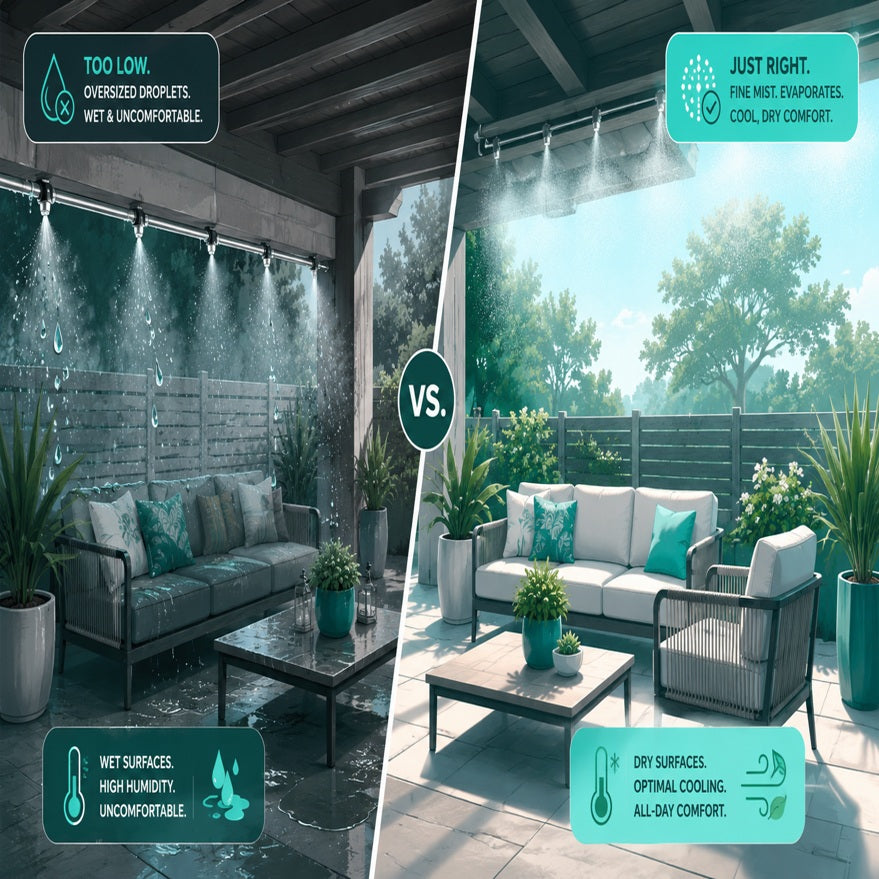
Calcium scale constricts micro-orifices and fouls pump valves, transforming fine mist into large droplets that fall instead of evaporate. The result is a cascade of problems: wetness on plant surfaces, uneven cooling zones, increased disease risk, and wasted labor troubleshooting issues that proper filtration would have prevented entirely.
Hard water is water with high concentrations of dissolved minerals, primarily calcium and magnesium, measured as calcium carbonate (CaCO₃). When pressurized water moves through tiny openings, these minerals precipitate out and form scale deposits that narrow passages and stick to surfaces.
Think of calcium buildup like cholesterol in arteries. The flow narrows gradually, almost imperceptibly, until performance collapses. By the time you notice nozzles dripping instead of misting, significant scale has already accumulated inside your pump and throughout the system.
High-pressure misting systems operate at 1000+ PSI specifically because this pressure creates micro-fine droplets that evaporate before reaching surfaces. When calcium deposits reduce that pressure or partially block nozzle openings, the droplets grow larger and heavier. Flash evaporation fails, and you're left with wet foliage instead of dry cooling.
Understanding warranty expectations matters here. According to product documentation, nozzles are consumable items, and damage caused by hard water or calcium buildup is not covered under warranty. Prevention is the operator's responsibility, which makes proper filtration not just smart maintenance but essential protection for your investment. For complete warranty details, review the Warranty information.
The Essential Filtration Stack

In hard-water regions, a phosphate filter is required to prevent calcium scale buildup. This isn't optional equipment; it's the primary defense that keeps your system functioning correctly over time.
Phosphate Filter: Non-Negotiable in Hard-Water Regions
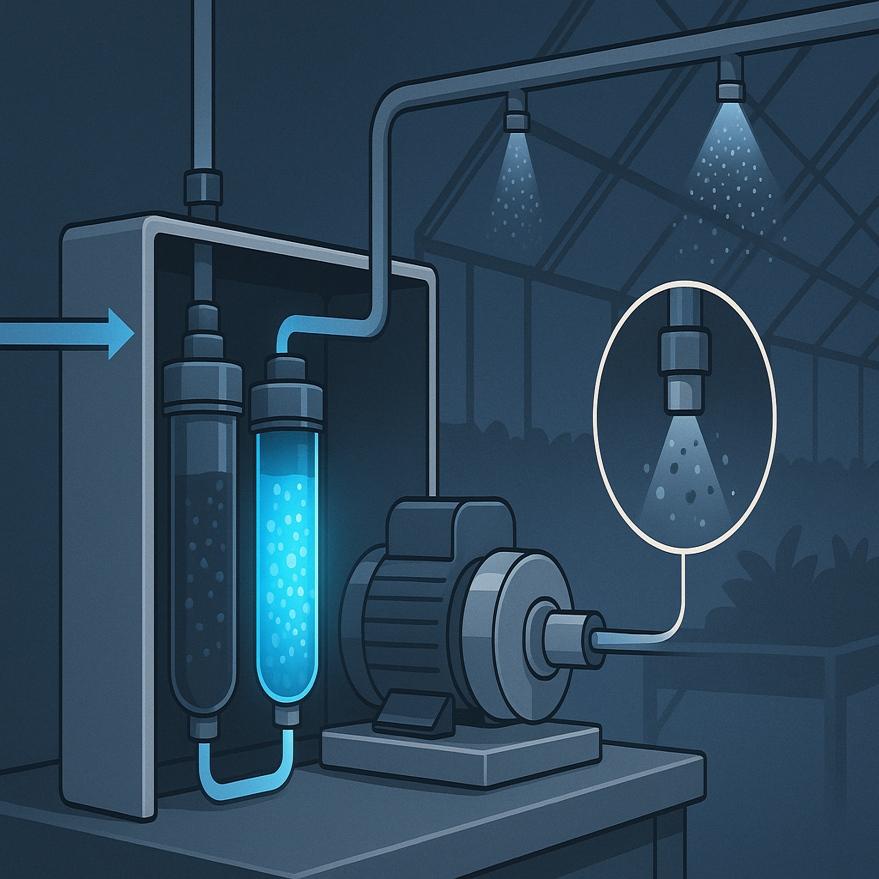
The phosphate filter isn't technically a filter at all. It's a water treatment system that uses slow-dissolving sodium hexametaphosphate crystal beads to prevent calcium from depositing on surfaces. Phosphate keeps calcium in solution and interferes with crystal formation, so minerals remain dissolved rather than plating out as hard scale in micro-nozzles and pump valves. The distinction matters because calcium flows freely through standard sediment filters, building up gradually in pumps and nozzles until problems emerge.
Install the phosphate canister before the pump intake, where it can treat incoming water before it enters the system. Single-canister configurations work well when hard water is your only concern.
Sediment Filter for Dirty Sources
If your water comes from a well or other potentially dirty source, pair the phosphate treatment with a sediment filter in a dual-canister configuration. Sediment filters remove physical particles like dirt and sand that would otherwise clog nozzles and damage pump valves. In dual setups, install the sediment filter first to capture particles, then the phosphate filter second to treat dissolved minerals. An optional 5-micron cartridge can filter even the tiniest particles for particularly challenging water sources.
The installation guides provide detailed instructions on filter placement and configuration options. Using original manufacturer parts for filtration components helps ensure proper fit and performance.
Quick Install Notes for Reliability
Proper installation of your filtration system and pump placement prevents many common problems before they start.
Keep the pump external and remotely located in a protected area away from direct sun and rain. A nearby shed, garage, or protected cabinet works well. Good ventilation prevents overheating. Pump enclosures offer additional weather protection for outdoor installations. Never integrate the pump into the fan unit itself; high-pressure misting systems always use three separate components: the fan unit, an external high-pressure misting pump from our line of commercial pumps, and high-pressure supply lines connecting them.
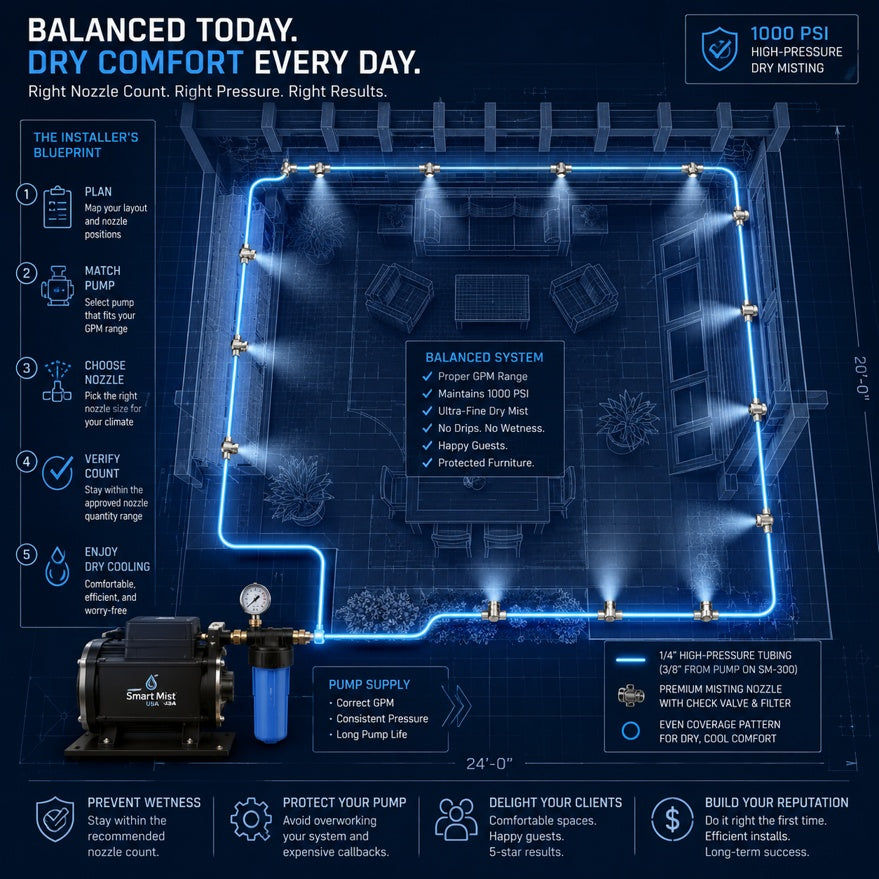
Position filters near the pump intake where they can treat water before it enters the system. When routing high-pressure lines behind ceiling surfaces, use a sleeve such as PEX or PVC to protect the lines. Route lines cleanly along open sides of structures, maintaining the recommended 24-30 inch spacing between nozzles. Closer spacing isn't better because droplets can combine into larger droplets that don't evaporate properly.
In some zones where moisture control is critical or air movement alone is sufficient—such as loading docks, packing areas, or staff break rooms—consider pairing your high-pressure misting fans with non-misting circulation fans from the same product line. They provide air movement without adding humidity, complementing your overall cooling strategy.
Filter Maintenance Schedule

Consistent maintenance prevents the gradual buildup that leads to system failures. The following schedule provides a framework; adjust frequency based on your local water hardness and system usage hours.
Weekly Tasks:
-
Visual inspection of filter canisters for cloudiness or discoloration
-
Purge air from the system
-
Check all connections for leaks
-
Inspect water clarity
Monthly or Usage-Based Tasks:
-
Replace or refresh filter cartridges based on water hardness and operating hours
-
Log all cartridge changes with dates for tracking replacement intervals
-
Clean the stainless steel mesh filter included with app-controlled pumps from our commercial pump line
Seasonal and Hour-Based Maintenance:
-
At 300 operating hours: Clean and wash water filter, change pump oil, check working pressure, replace any damaged nozzles or fittings
-
At 1500 hours: Replace water filter if cleaning no longer restores performance, change water seal and O-ring
-
At 2000 hours: Change oil seal, inspect pump bearings
Winterization (Before Freezing Temperatures):
-
Unplug the pump and disconnect the system
-
Remove the last nozzle and attach the drain fitting to clear water from lines
-
Open the filter valve to drain the canister
-
Remove remaining nozzles to prevent implosion from expanding residual water
-
Bring the pump inside for winter storage
Keeping a maintenance log helps establish the right replacement intervals for your specific water conditions and usage patterns.
When a Nozzle Clogs: Clean or Replace
Nozzles are consumable items designed to be replaced when performance degrades. When a nozzle clogs, you have two options: clean it or swap it out.
For calcium deposits, soak affected nozzles in CLR solution rather than vinegar. CLR is specifically formulated to dissolve calcium, lime, and rust deposits effectively. After soaking, rinse thoroughly with clean water before reinstalling. Test the spray pattern at full pressure to confirm proper misting has been restored.
The decision rule is simple: if a nozzle doesn't produce a fine, even mist pattern after cleaning, replace it. Continuing to run compromised nozzles affects cooling performance across your entire zone and can mask other system issues. Keep spare nozzles on hand so replacements don't delay your return to normal operation.
When multiple nozzles clog simultaneously or clogs recur frequently, the root cause is almost certainly inadequate filtration. Address the filtration issue first, then replace affected nozzles. Browse high-pressure misting system kits for complete system options that include properly matched filtration components.
Preventing Wetness While You Prevent Clogs
Dry cooling depends on micro-droplets evaporating before they reach surfaces. When mist creates wetness instead, the cause typically falls into one of four categories:
-
Environmental conditions: Temperature too low and/or humidity too high for efficient evaporation
-
Mounting height:Fan positioned too low for droplets to evaporate during descent
-
Nozzle sizing: Nozzle orifice too large for the application, producing oversized droplets
-
System pressure: Total nozzle load too large for the pump capacity, resulting in insufficient pressure
Note that flow rate is determined by nozzle size and quantity selected during initial setup. There are no user-adjustable pressure or flow controls on the pumps. When a higher or lower flow rate is needed, a different pump size would be used. The two basic parameters for nozzle size selection are climate (humidity levels) and mounting height.
For reference, fans are typically mounted around 10 feet high. When paired with 18-24 inch ceiling fans, this creates a cooling diameter of approximately 12-16 feet. Mounting fans too low reduces the distance droplets travel before reaching surfaces, preventing complete evaporation.
Proper filtration prevents clogs that reduce system pressure, but it won't compensate for incorrect nozzle sizing or environmental conditions that prevent evaporation. High-pressure misting fans can cool surrounding areas by up to 25 degrees depending on temperature and humidity conditions. Drier climates naturally experience more evaporation and therefore achieve greater cooling effects, though proper system design delivers reliable performance across varied environments.
What Real Operators Report
Customer feedback consistently highlights filtration as the dividing line between systems that perform reliably and those that struggle with recurring problems.
One installer in Tucson, Arizona, shared this experience after troubleshooting a client's system: the nozzles were dripping instead of misting, and the root cause was missing filtration. New filters and nozzles restored full performance. Another operator in Las Vegas noted that hard water affects all misting systems and emphasized the importance of proper scale filtration.
Customers in hard-water regions like Phoenix and Arizona frequently mention the need to add phosphate filtration after initial purchase, with several noting they wished the requirement had been more prominent during the buying process. The pattern is clear: operators who install proper filtration from the start experience fewer issues and lower long-term maintenance costs than those who address hard water reactively.
Make Dry Cooling Reliably Predictable
Filtration is the cheapest insurance for your high-pressure misting system. A phosphate treatment system costs far less than replacing clogged nozzles, damaged pump components, or an entire system that failed prematurely due to calcium scale. More importantly, proper filtration protects the dry-cooling performance that makes 1000-PSI misting valuable in the first place.
The investment in filtration also protects your warranty expectations. Since hard-water damage and clogging aren't covered as defects, prevention through proper filtration is the only path to reliable, long-term performance.
Start with the right filtration stack for your water conditions. Follow a consistent maintenance schedule. Replace nozzles promptly when cleaning doesn't restore performance. These simple practices transform high-pressure misting from a potential maintenance headache into the reliable, predictable cooling solution your greenhouse or nursery operation deserves.
Ready to protect your system? Contact Smart Mist USA to schedule your free phone consultation with Jeff, or explore the full range of filtration options and system components available with same-day processing.
About the Smart Mist USA Insights Team
The Smart Mist USA Insights Team is our dedicated engine for synthesizing complex topics into clear, helpful guides. While our content is thoroughly reviewed for clarity and accuracy, it is for informational purposes and should not replace professional advice.
Disclaimer:This guide is intended as a comprehensive starting point. For decisions specific to your unique situation, we always recommend consulting a qualified professional.